
Embodied carbon
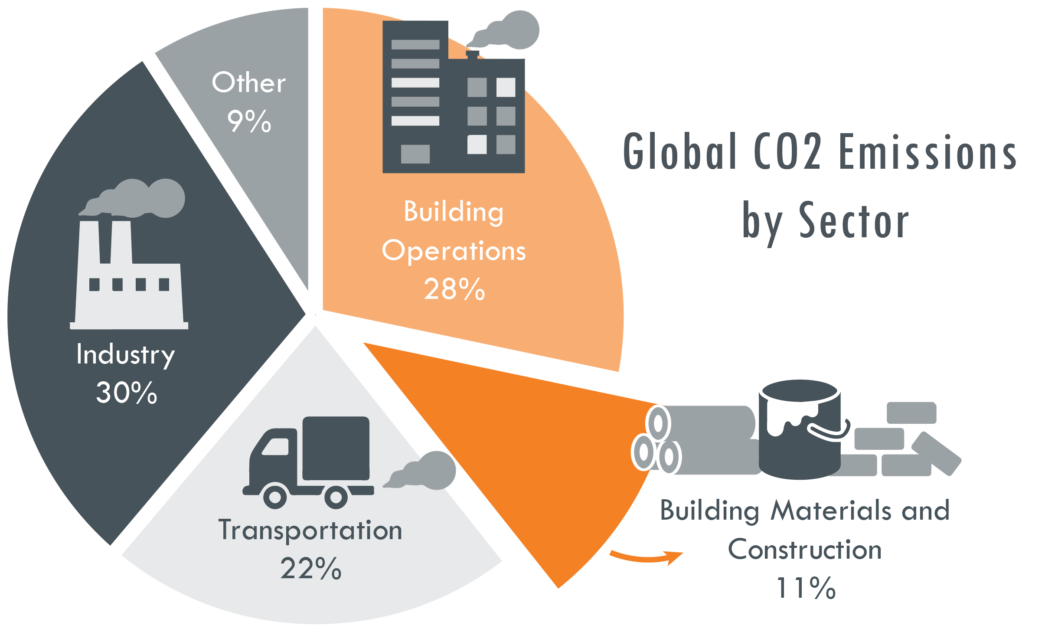
Buildings have a significant impact on global greenhouse gas emissions and play a major role in contributing to climate change, up to 39% of global emissions.
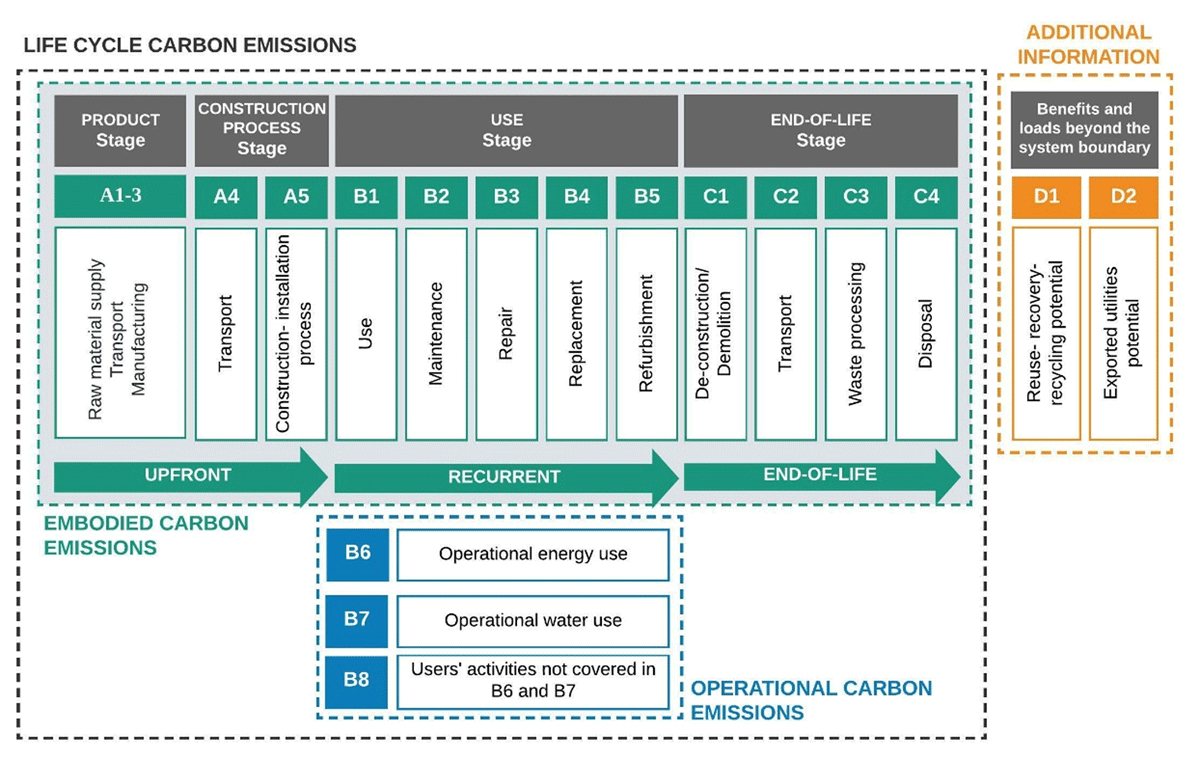
Apart from operational carbon emissions, embodied carbon emissions from the production of building materials, construction, and demolition also contribute to the building sector's carbon footprint.

Decreasing the embodied carbon of our buildings
Embodied carbon refers to greenhouse gas emissions generated during the production of building materials and construction including transportation, use phase and disposal.
It is an important factor to consider for sustainable building practices, as it accounts for a significant portion of a building’s overall carbon footprint.
At Cordeel, we are committed to reducing the embodied carbon of our buildings. By carefully selecting durable and sustainable materials, we build future-proof projects for our customers. Parts of the industrial buildings we realise are built with wooden beams. Another important approach is the usage of substitute cementicious materials (SCMs) in our green concrete’s composition.
Green concrete
Concrete is unavoidable in our projects, which is precisely why we focus so heavily on reducing its carbon intensity.
On the purchasing side, we work with suppliers to collect LCA and EPD data for ready-mix concrete, pushing for transparency and lower-carbon alternatives.
On the production side, our green concrete programme at our precast facility in Temse has been running since 2018.
Structural components like columns, beams, walls and floors have a significant impact on the embodied carbon of buildings.
We aim to industrialise the building process as much as possible and use concrete precast elements for structural components, prefabricated by C-concrete.
“Our ‘green concrete’ initiatives aim to cut embodied carbon in our precast elements by using less and other cement and substitute materials.”
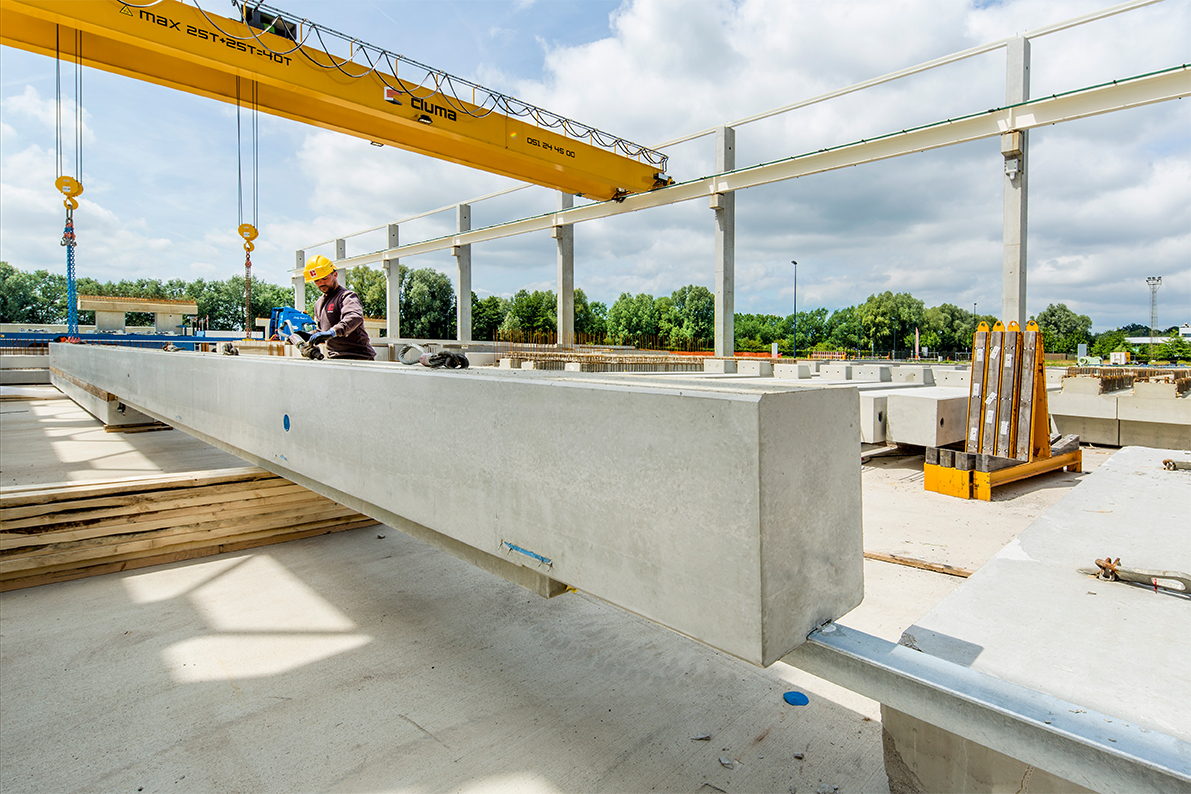
Our current standard formula is still within the BENOR norm, which gives us a competitive edge in the market. Since Q2 2024 we are producing our regular beams, columns and full walls with 100% CEM III/A. This accounts for a reduction of embodied of more than 33% compared to CEM I.
We continue to reduce CO2-emissions by using alternative binders, substitute materials, and additives to continuously adapting the formulas of the different types of concrete we use.
In 2024 we used CEM II/A for the production of white concrete for the first time, which reduced our emissions by 10% compared to CEM I.
We have installed a silo for blast furnace slags or other cement substitutes which will accelerate the production of more individual concrete mixes. Blast Furnace slags are recycled raw materials from the metal industry, that are used to substitute cement clinker.
Our granulate recycling installation helps us to recover the granulates from our excessive unhardened concrete, thus reducing our concrete waste and the loss for virgin materials.
Most of our raw materials like sand and aggregates are being delivered by boat to our facility in Temse.
In 2025 we produced hybrid floors for a project in Antwerp: CLT floors with a thin layer of CEM III/A concrete on it. Combining the best of esthetics, partly carbon storage as well as fire and acoustic performance.

Green concrete: our approach to decarbonising precast elements
Bio-based materials
Bio-based materials store carbon rather than emit it, making them one of the most direct levers available to reduce embodied carbon.
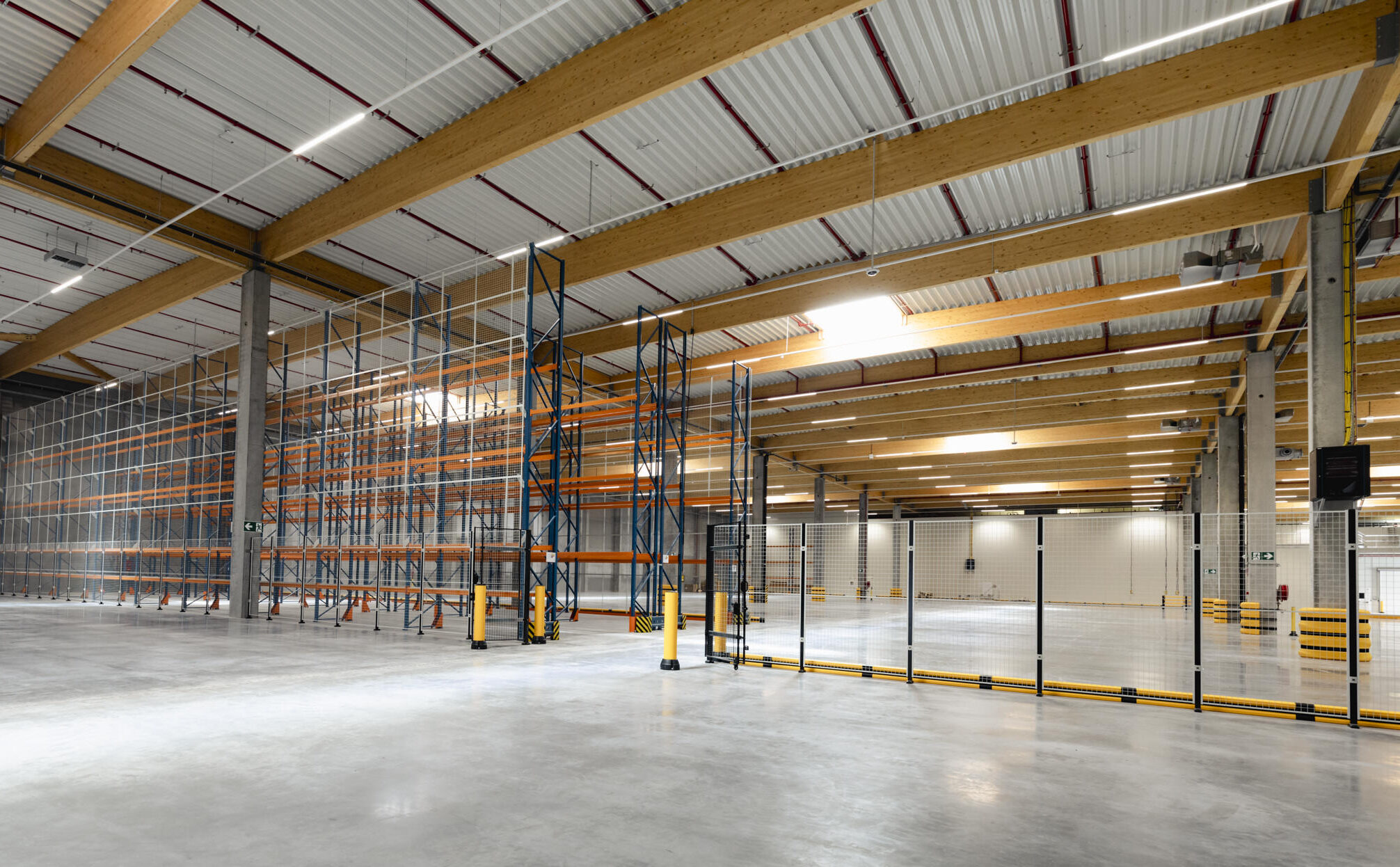
We are building with glulam beams, CLT, wood skeleton facades, and Sinqer modules: 3D prefabricated timber units that combine speed of construction with a significantly lower carbon footprint than conventional alternatives.
The application of timber varies by project type and structural requirement.
At the Brucargo Central logistics building in Zaventem, glulam beams carry the structure while CLT panels are used in the offices, combining the material’s structural efficiency with its carbon storage properties.
In Bree, we are currently building De Weeg, a multifunctional sport and residential complex.
The sports complex is built with timber beams and columns, while the residential tower above it uses CLT panels: prefabricated off site and connected dry on site, which shortens the construction programme and keeps the structure fully disassemblable. De Weeg is planned for completion in summer 2027.

Scaling hemp-based materials
We control the complete hemp value chain, from field to finished insulation product.
It starts in Flanders, where we grow the hemp. After harvest, we process it into intermediary products within our own chain.
The final step became fully integrated in late 2025 when we acquired a production facility in Bavaria, Germany, through our joint-venture C-Hempflax Building Solutions GmbH.
The factory has been producing hemp wool insulation since the 1990s, which means we inherited not just the machinery and the site, but decades of production expertise and the full product certifications needed to supply the market immediately.
Hemp wool insulation replaces mineral wool, is easier to install, is better for the health of building occupants. Our hemp wool insulation achieves a thermal conductivity of λ = 0.038, meeting the performance standards the market demands.
Hemp is a versatile plant with many possible applications. Together with our partner Trafiroad, we will install hundreds of traffic poles made from a biocomposite based on hemp.

Bio-based insulation made from hemp
Renovation projects
In the last years, we are witnessing an increase in renovation projects, particularly in Brussels. These projects typically have very high sustainability and circularity ambitions.
Renovating existing structures, rather than opting for demolition and new builds, avoids thousands of cubic meters of new concrete that would otherwise need to be produced. This makes renovation one of the most direct decarbonisation levers available to us and an area we are growing deliberately.
For some of the current projects we already apply the Heat As A Service concept by C-energy and plan to adopt the ESCO model (Energy Service Company model) as well for future projects.
This allows for comprehensive energy performance improvements, ensuring that renovations are not only structurally sustainable but also energy-efficient in the long term.
One of the most compelling examples of this approach is the renovation of the Multi redevelopment, a landmark located in the heart of Brussels. Our construction team realised a BREEAM Excellent certification for the renovation project completed in 2022, with a strong focus on utilising recovered materials.
Oxy: There is a deliberate choice for a thorough renovation, with materials being reused either on-site or elsewhere. The building also distinguishes itself in terms of energy sustainability, including the integration of heat pumps and incorporating solar panels into the facades. The mixed-use building will comprise 43,000m² of offices, a 15,000m² hotel with 316 rooms, and 112 apartments.
Montgomery Square: We started renovating the former RIZIV buildings in Brussels into a future-proof complex with offices, a large park, sports facilities, and other amenities. The 22.000 m² project aspires to reach a number of ambitious sustainability certifications like BREEAM Outstanding, DGNB Platinum and WELL Platinum.
The Ambiorix site in Tongeren is a former military site that is being redeveloped by C-living. The former buildings are renovated step by step, keeping the character in tact. Additionally, we focus on removing the former sealed areas and creating a future-proof and ambitious masterplan that takes into account the biodiversity of the nature reserve “De Kevie”.


Future-proof logistics buildings
In late 2024, we launched NEXUS Logistics, a new modular warehouse concept that combines circular construction with high energy performance.
Drawing on the collective expertise of our subsidiaries and partners, we deliver tailored logistics facilities that are adaptable, low-carbon and built fast.
The warehouses are designed to evolve with changing business needs, allowing for expansion or reconfiguration without material waste.
The concept prioritises sustainability at every level without over-stretching construction budgets. Bio-based insulation, low-emission steel decks, timber beams and low-carbon concrete reduce embodied carbon by 38% compared to traditional concrete warehouses.
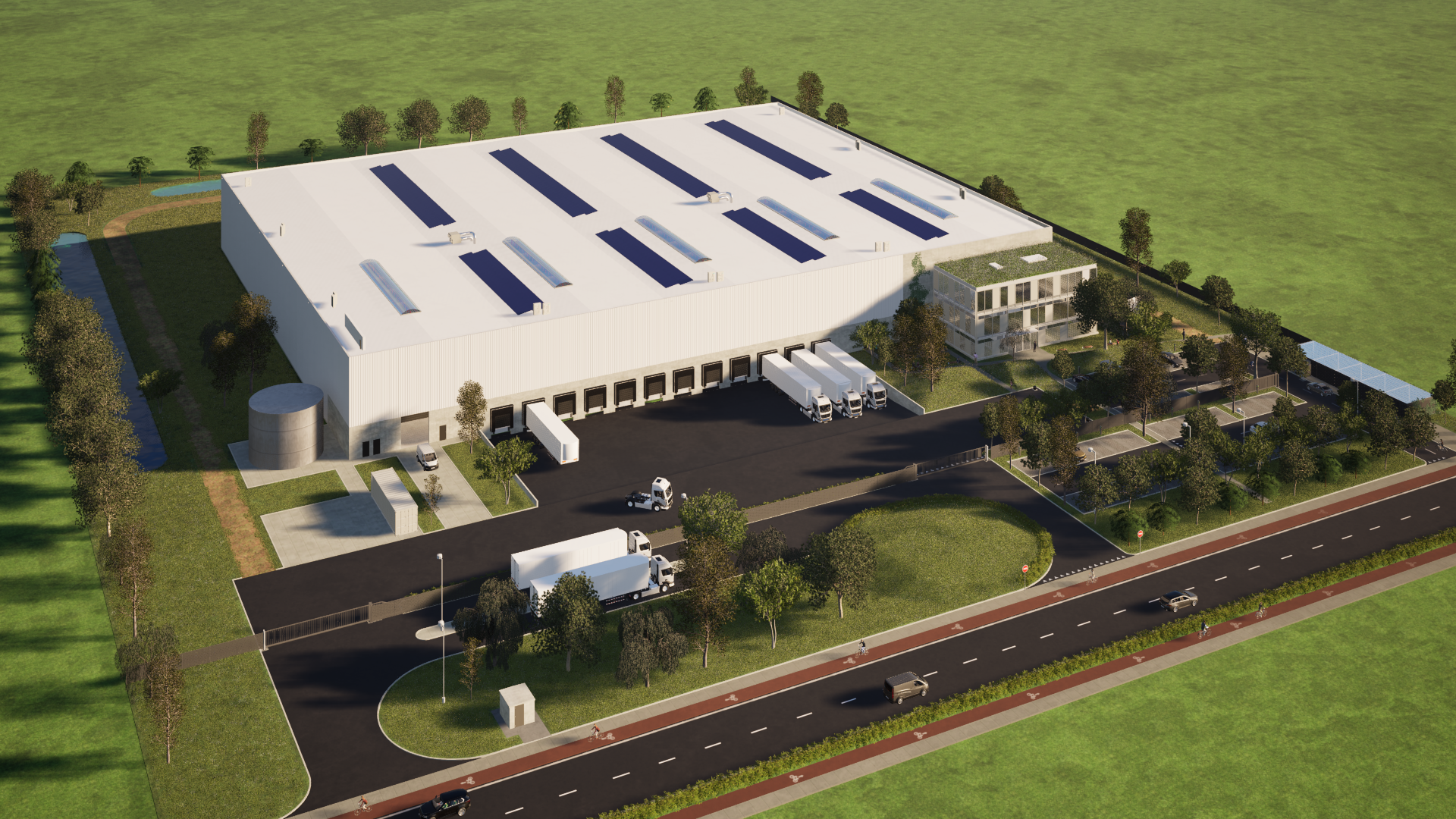
Energy systems are engineered to use 20 kWh per square meter annually – compared to a sector average of annually 70 kWh/m² just a few years ago.
“We not only reduce our customers’ ecological footprint and energy bills, we also make their operations future-proof and ready for the logistical challenges of tomorrow.” Kevin De Hainaut (CEO Cordeel Belgium)
Heat pumps, charging infrastructure, solar panels and optional battery storage are being installed while Energy Management Systems further enhance efficiency and control.
These energetic systems can be offered in an “as a service” approach as well, reducing the CAPEX of the project.
Prefabricated components, a standardized grid and detailed BIM modelling ensure fast construction and smoother project delivery.
Finally, NEXUS Logistics also addresses biodiversity with features like green roofs and adapted landscape design. The outside recreational areas enhance employee well-being, creating a harmonious balance between nature and industry.
Find a video online: https://www.youtube.com/embed/GSB40ZOl1U8?si=?autoplay=1&mute=1
Life Cycle Assessments
We see an increasing demand for LCA’s in tenders which is why we build up in-house knowledge. We are conducting these assessments on product- and building-level using the One Click LCA tool to confirm our assumptions and intentions on reducing their impact.
For our most used precast concrete mixes we have conducted LCA’s which helps us to continuously improve the formula. In 2026 we will update an EPD for one of our most current products.
Currently, we’re finishing the LCA of C-battery’s battery modules. We’re also working on the LCA’s and EPD’s for various other materials we produce like hemp-based products or plaster.
Internal focus groups
The Focus Groups are crucial to improve our impact on Cordeel Group’s most material sustainability matters. They are composed of multidisciplinary teams from different entities.
Green concrete
The focus group “green concrete” is driving the reduction of embodied carbon of our precast concrete production and explores as well the use of secondary raw materials.
Sustainable standardisation of industrial buildings
This focus group is working on improving the standardisation of our industrial buildings. They focus on the reduction of embodied carbon and improving on design for disassembly and other circularity aspects. By making our standardisation for industrial buildings future-proof, we support our customers in their sustainability performance.
The focus group is sponsored by Isabelle Dumon, Director of Sustainable Transformation.